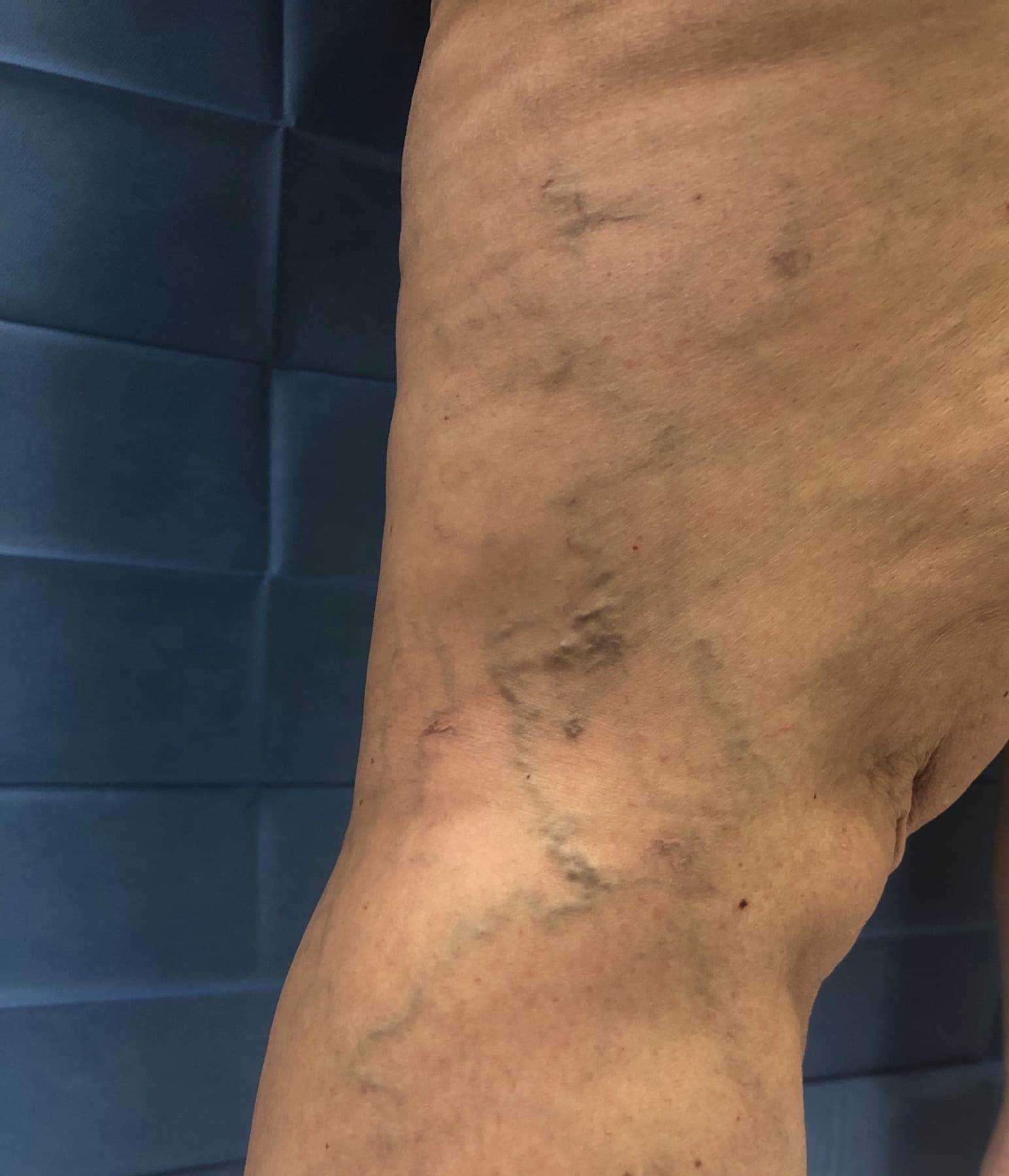
Chronic venous disease of the lower limbs, the condition behind so-called varicose veins, is one of the most frequent diseases in our population: it affects up to 56% of men and 60% of women (Epidemiology of chronic venous disease. Phlebology. 2008;23(3):103-11).
Up to 2% of the population reaches the most severe stages of the disease, developing chronic skin ulceration linked to venous hypertension (Ma H. The real cost of treating venous ulcers in a contemporary vascular practice. J Vasc Surg Venous Lymphat Disord. 2014 Oct;2(4):355-61).
Technique and strategy
This section deals with the difference between technique and strategy in the treatment of varicose veins. In an era of continuous technological evolution, many minimally invasive treatment options are on offer.
Beyond traditional surgery aimed at removing the whole saphenous vein and its tributaries (the “stripping” operation), it is possible today to treat the affected leg with ultrasound-guided endovascular procedures. These consist of introducing a device — a fibre, a catheter or a needle — inside the diseased vessel, and then eliminating that vessel by delivering thermal energy and/or occlusive substances.
The thermal techniques include Laser, Radiofrequency, Microwave and Steam. All of them require the infiltration of an anaesthetic around the treated vein, since the high temperatures could cause pain during treatment.
Among the non-thermal ablative techniques there is closure of the vein with Glue. Here no anaesthesia is needed around the treated vein, because no thermal energy is delivered: the whole treated vein is glued shut, so that blood can no longer pass through it.
Another ablative option, known as Mechano-chemical Ablation (MOCA), consists of entering the vessel with a hooked catheter. Those hooks create micro-trauma of the inner wall of the vein, so that a sclerosing agent injected at the same time penetrates better and eliminates the vein.
Finally, that same sclerosing agent can be used directly in liquid or foam form, to eliminate the vessel without first scarifying its inner wall. The foam form is more powerful than the liquid one, because the foam physically displaces the blood and therefore acts undiluted directly on the vein wall. Moreover, it is visible on ultrasound and so allows more precise localisation of the treatment target.
But all these techniques, more or less modern, are precisely techniques based on the same strategy of eliminating the diseased vessel and, not by chance, the result in terms of venous disease recurrence remains the same. They may be more or less invasive, with or without anaesthesia, but they all rest on the destruction of the diseased vessel.
Repairing the circulation
The alternative is to repair the venous circulation, acting precisely and minimally invasively on the points where the valves inside the vein no longer keep the flow in the right direction. After a detailed ultrasound examination, the pathological flow is studied together with the best site to redirect the blood, so that it can return towards heart and lungs instead of draining towards the surface and the most distal part of the leg.
This strategic approach has been shown to halve the risk of disease recurrence compared with removing the diseased vessel (CHIVA method for the treatment of varicose veins. Cochrane Database of Systematic Reviews 2012, Issue 2. Art. No.: CD009648).
The reparative techniques
Depending on which valves are failing, different techniques can be applied — always minimally invasive, under local anaesthesia or even without anaesthesia — aimed at closing the escape points of the venous system. This reduces the overload inside the previously dilated vessel, brings it back to a normal calibre and eliminates the reflux, without removing any vein (CHIVA: instructions for users. Phlebology Journal 2014).
If the major valves are incompetent, minimally invasive surgery under local anaesthesia is possible, with no need for external sutures thanks to the precision of the ultrasound-guided procedure (Mini-invasive high-tie by clip apposition versus crossectomy by ligature: long-term outcomes and review of the available therapeutic options. Phlebology. 2017 May;32(4):249-255; Femoral vein valve incompetence as a risk factor for junctional recurrence. Phlebology. 2018;33(3):206-212).
Where the incompetent valves lie in the superficial system, the most modern endovascular technologies can be used (Laser, Radiofrequency, Glue, MOCA, ultrasound-guided foam, Microwave). Rather than using them to remove the whole vessel, they are used to treat specific points identified precisely along the venous circulation (Segmental Saphenous Ablation for Chronic Venous Disease Management. J Vasc Surg VL 2019;7(2):307-308).
A strategy based on repair rather than demolition has been shown to deliver better results, provided it is carried out by specialists with considerable specific skill, both in ultrasound and in practice. The guidelines themselves therefore recommend a reparative rather than an ablative approach, but only in centres with sufficient experience (The care of patients with varicose veins and associated chronic venous diseases: clinical practice guidelines of the Society for Vascular Surgery and the American Venous Forum. J Vasc Surg 2011;53(5 Suppl):2S-48S).